Pay Smarter. Take Control.

Control how and when approved invoices are paid.

Fund approved supplier invoices on the company's commercial card, with suppliers paid by EFT and never seeing a card. Or offer early settlement at an agreed discount that suppliers can take or leave. Use one, the other or both. Switch it on where it fits, switch it off when it doesn't.

What are you looking to achieve?

Two outcomes. One control point.

Whether you're managing the balance sheet or the P&L, the post-approval moment is the same lever, pulled differently. Pick the outcome that fits your finance objective today.

Prefer a role-based view? Read for CFOs, Financial Controllers, Treasury, Heads of AP or Procurement.

Approved quickly. Paid to terms. Why?

One control point. Two ways to use it.

Your invoices are approved earlier and more reliably than ever. Yet payment timing and method stay fixed, decided long before approval and rarely revisited. GlobalFinex B2B operates only on approved, ready-to-pay invoices. From that moment, you decide whether anything optional happens, or not. Two independent levers. Use one, the other or both. See the full mechanics →

Method lever
How cash is settled

Flow: ePayment

Centralised, governed settlement execution on approved invoices. Suppliers continue to receive funds via EFT into their nominated bank accounts, with no card handling required. Card rails, including VCN, run inside our managed environment, with GlobalFinex B2B as the business payment solution provider.

  • Buyer-defined eligibility and scope
  • Card-rail extension without supplier-side handling
  • No borrowing: a trade payable becomes a card payable
Flow: ePayment overview →
Timing lever
When cash leaves

Pace: Dynamic Discounting

Selective early settlement on approved invoices in exchange for a mutually agreed discount. Voluntary for suppliers. Buyer-controlled, switched on for month-end and off again afterwards. No programme commitment.

  • Your rules, not a programme
  • Pause or adjust, nothing to unwind
  • Aligned to supplier segments, not universal mandate
Pace: Dynamic Discounting overview →
Nothing to unwind. That's the point.

The moment it becomes structural, it stops being useful.

Most working-capital tools demand commitment: facilities, programmes, term changes. Few of them flex with your rhythm. GlobalFinex B2B does: run the levers as a rolling facility, or pulse them at month-end and year-end and turn them off once the position normalises. The tool fits the use, not the other way round.

Steady-state
Levers active throughout the period, used like a rolling facility.
Month-end pulse
Levers active around the close, switched off once the position normalises, with no structural commitment.
Year-end pulse
Levers applied hard into the year-end position, then stood down. The reporting date moves, the contracts do not.
Built for finance-led environments

Boundaries you benefit from

The boundaries of the platform are deliberate. They protect your governance posture, your supplier relationships and your right to change your mind.

Optional

Suppliers participate voluntarily

No mandates, no forced onboarding. Each supplier decides whether each option is useful to them.

Selective

Apply where it fits, not everywhere

Buyer-defined eligibility. By supplier segment, by entity, by currency, by period.

Switch on, switch off

Pause or adjust without unwind

No structural commitment. Strategies can be changed as conditions change, without supplier disruption.

Approved-only

Operates on confirmed liability

No pre-approval funding, no supplier credit underwriting, no assumption about invoice validity.

No borrowing

A trade payable stays a trade payable

No facility, no covenant input. A supplier invoice settled by card becomes a card payable, in working capital, not in borrowings. See the balance sheet treatment →

Audit-ready

Governance built in

Full auditability across eligibility, offer, acceptance, settlement and remittance.

Case Study · Visy

How a global packaging leader used card rails without supplier friction

Visy retained the funding model it wanted, while removing the supplier-side and operational constraints that had previously limited it. Suppliers receive straightforward EFT settlement. Visy retains card-rail funding when it suits the working capital position. Selective application across a diverse supplier base of 120+ sites in ANZ and multi-currency operations, without imposing a single approach.

Read the Visy case study →

There's now a genuine decision point between invoice approval and payment that we actually use. That flexibility has been more useful than I expected, particularly when conditions change quickly and you want options that don't require renegotiating terms.

Richard Xuereb
General Manager Finance, Visy
Reading this for your team?

Same control point. Different reader.

The most useful version of this site for you depends on your role. Each lens covers what changes for you, what doesn't and what to bring to your first internal conversation.

2026 White Paper

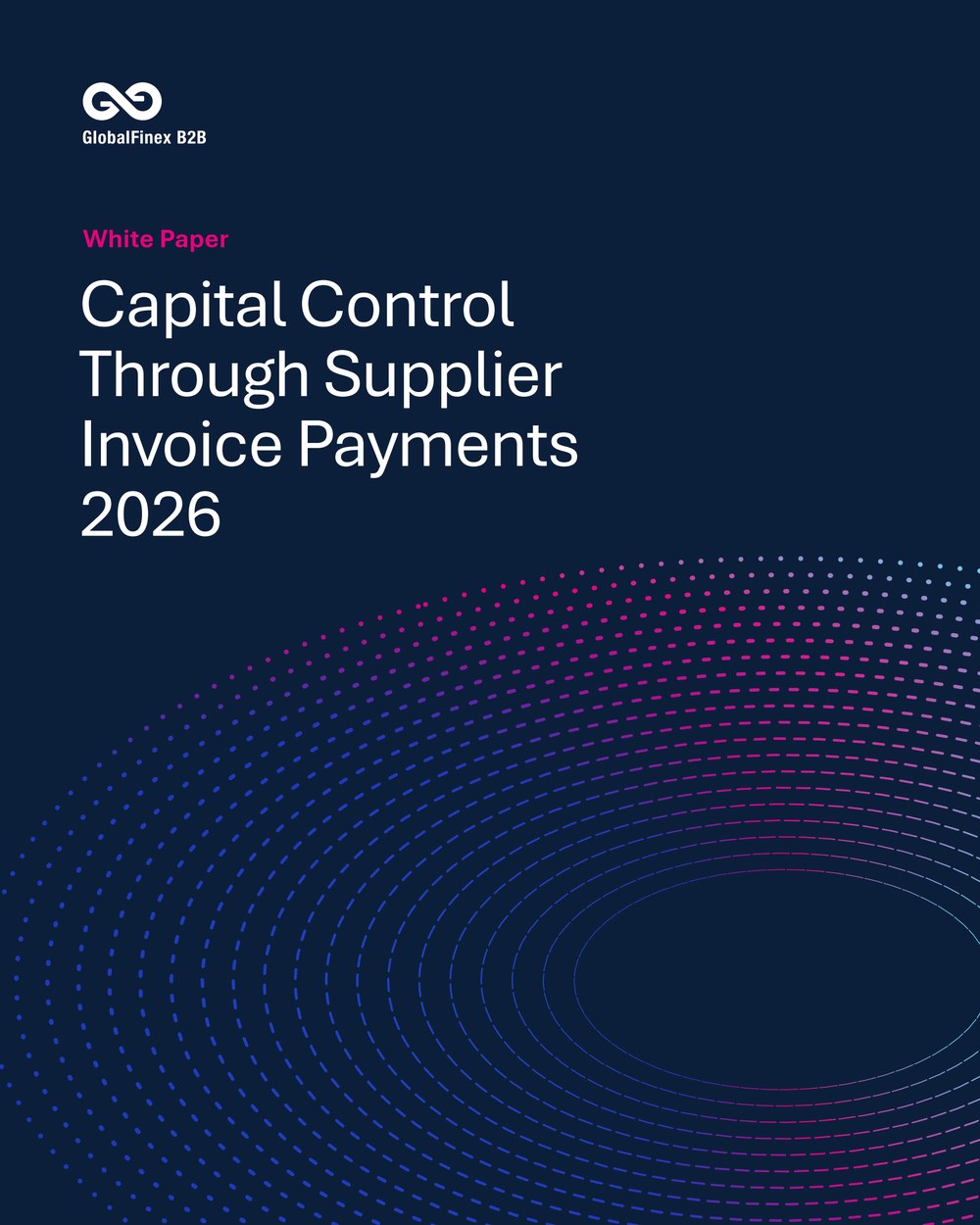
Capital control through supplier invoice payments

Across treasury and CFO conversations, a consistent theme has emerged: volatility is no longer episodic. Liquidity and working capital are moving from operational disciplines to strategic levers. Payment execution is being re-rated.

This paper does not assume anything is broken. It explores an opportunity that sits quietly inside a reality most finance leaders already recognise, and asks one question:

Do we have sufficient control and optionality over how and when approved liabilities are settled as conditions change?

No form, no gate. If it earns the read, it earns the read.

Capital Control Through Supplier Invoice Payments, 2026 · GlobalFinex B2B white paper cover

Part of the B2BE Group

GlobalFinex B2B is built and operated by B2BE, with more than 27 years supporting organisations where transactions sit at the centre of customer experience, supplier relationships and cash flow. Read about the Group →

B2BE · Business to Business e-Solutions

Not a pitch. A question.

Most organisations have more post-approval discretion than they currently exercise, and two inputs and five minutes will tell you whether yours does. No detail captured unless you want a copy, and no call unless you want one.